

Doctor Blade Coating Machine Facts You Need To Know
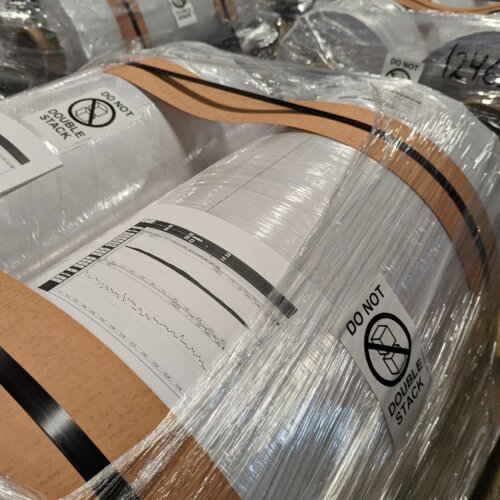 If you’re interested in learning about the doctor blade coating process, Conversion Technologies International has the facts. That’s what we’re here for—to tell you a little more about this coating method, why we use a doctor blade coating machine, and more how it can help you grow your business.
What is doctor blade coating?
A doctor blade coating machine differs from other types of coating in its use of a knife. We call this knife a “doctor blade”, and we use it to spread coatings across a substrate. The point is to ensure the coating is smooth, even, and without flaws. Typically, the solutions we work with cover classic pastes and liquid coatings. However, they also include slurries and adhesives. Their main commonality is that they’re viscous, which is why we need the doctor blade coating machine.
At times, you’ll see a doctor blade referred to as a gravure doctor blade, which refers to its use in the gravure printing process. Broadly speaking, however, we begin the process by depositing the coating onto a substrate. We do this with the help of the coating head. At this point, the doctor blade scrapes across the solution, getting it to its final form.
One of the reasons why we love a doctor blade is its degree of precision. We set the gap between the blade and the substrate. That’s how we control the thickness of the coating, as well as its viscosity, shearing, and overall appearance.
How thick is the doctor blade coating?
The thickness of a doctor blade coating depends on the project, the setting of the doctor blade coating machine, and your preferences. Like we said, we control the thickness of the coating through the gap between the blade coater and the substrate surface. Usually, it ranges between .005 millimeters to three millimeters. However, the capabilities of the machine allow us a range of tens of hundreds of microns.
Usually, the ultimate thickness of the coating is half to two-thirds of the blade gap. Speed also affects this measure, though not to the extent of the gap.
Why is it called a doctor blade?
We call the knife of a doctor blade coating machine a doctor blade because it “doctors” the coating. It’s also connected to the original title of “ductor blade”, which changed over time. By controlling the flow of the solution—and the thickness of the coating—it treats the surface. Hence, doctor!
Frequently Asked Questions
At CTI, we frequently field questions about not only doctor blade coating, but adhesive coating methods more broadly. Let’s dive in!
What are the applications of a doctor blade coating machine?
We can apply a doctor blade coating machine to address a variety of different needs. These include:
- Energy and electronics. We can apply the doctor blade coating process to everything from battery electrodes to fuel cells and thin-film solar cells.
- Manufacturing materials. Many types of manufacturing materials require precise coating, and that’s exactly what doctor blade coasting accomplishes. Here, we apply it to ceramics, adhesive products, and pharmaceuticals. It’s extremely important that these manufacturing materials achieve consistency, both aesthetically and functionally.
- Textiles and paper. When it comes to coating, paper and textiles function similarly. In this case, we can usually apply coating to textiles similarly to how we apply to paper. This frequently coincides with the printing process, but we also use the process to apply protecting coatings. This allows us to produce materials water- or fire-resistant (or both!).
What are some alternative coating methods?
By no means is doctor blade coating the only coating process, particular for adhesives. Some alternatives include:
- Industrial roll coating. Sometimes referred to as roll to roll coating, this process functions quickly, consistently, and precisely. We use it to apply liquid solutions like varnishes, paints, and adhesives to a variety of different substrates. These substrates include most flat materials, ranging from metal to wood, as well as paper and plastic.
- Spray coating. As the name implies, this method allows us to provide coating in spray form. Frequently, we use melted solutions, though the method can handle powders and conventional liquids as well. it ensures a uniform coating, and works well with protective coatings.
- Dip coating. This method allows us to submerge a material in a liquid coating. This coating method works well with products that require an “all over” coating.
- Curtain coating. Often applied to linear materials, this method involves moving the product through a continuous curtain of coating.
What are my outsourcing options?
There are two main types of third party manufacturing options, which we sometimes call “outsourcing”. They include toll manufacturing and contract manufacturing. Toll manufacturing involves outsourcing production the third party, while you provide the raw materials. Contract manufacturers handle the process from beginning to end.
You’ll select your option based on your current needs. If sourcing raw materials is your goal, toll manufacturing allows that extra element of control. If you’d prefer a more all-encompassing, convenient process, contract manufacturing may be a better option.
What should I do next?
Next, we recommend connecting with CTI for further information. Call us at 419-924-5566 or contact us here and learn more today!
- << < Previous Post
- 1
- 2
- ...
- 12
- ...
- 325
- 326 Next Post > >>