

Belt Lamination Machine Facts: Do You Need To Buy One?
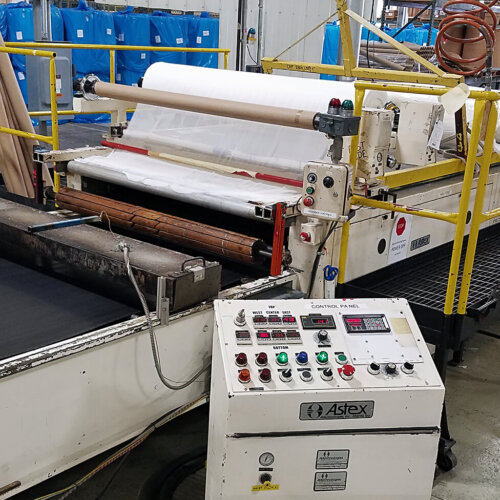 Before you invest in a belt lamination machine, assess your unique situation, read this article—and consider giving Conversion Technologies International a call.
How does belt lamination work?
Belt lamination is one of the main lamination processes currently available in the industrial manufacturing field. It functions with a “sandwich” method, placing an adhesive layer between two flat surfaces. We pass the adhesive through the machine, flattening it into its laminated form.
We call the other sides of the sandwich substrates, and they come in several different forms. They usually include foam, fabric, and various composites, transported as rolls or pre-cut sheets. The adhesive layer, on the other hand, comes in the form of web, liquid, film, or thermoplastic powder.
The sandwich moves through opposing conveyor belts. They’re usually heat-resistant, creating what we call “heating zones”. The heating zones melt the thermoplastic powders. This liquified adhesive coats the substrate materials without any damage. The compression of the substrates completed, the materials move into cooling zones. Cooled temperatures harden the adhesive and substrate combination, which keeps them from shifting or loosening.
How much does a belt lamination machine cost?
There are two main types of belt lamination machines. One operates through manual use, which means you’ll get less product, and you’ll get it slowly. Consumers typically buy these for small-scale or personal projects. They’re not meant for the types of large production orders CTI usually works with. With that in mind, these smaller machines cost around $300.
A large belt lamination machine is a very different story. The sheer volume capacity of these machines ensure they sell for a much higher price. It’s not unusual to see this type of belt laminator for as much as $700,00. This price is why many business owners consider the benefits of outsourcing as opposed to producing in-house.
Another factor you should consider is price range. While the prices we mentioned above are standard, they can vary. A smaller machine can sell for up to $1,500. This is more attainable for a very small business, but isn’t always worth it when they consider the level of production needed. More typical commercial and industrial laminators may sell for $4,000 $20,000. While these machines can process at a higher volume than smaller machines, the investment doesn’t always pan out. When you estimate the total costs of a $20,000 machine in terms of operation, think about how frequently you’ll use the machine.
Additionally, the initial investment is just the beginning. These machines also require facilities, regular maintenance, and operators. When you buy a permanent machine, you’ll want to get the most out of it. That’s not always possible. And in that case, we recommend considering working with a third party manufacturing. A reliable provider of laminating services can be a great alternative to buying your own belt roller machine.
Where can I get a lamination machine?
If you find yourself searching “lamination machine near me”, it might be a good idea to think about what you truly need for your business. Do you need to buy a laminating machine, or would you be better off working with a third party manufacturer?
While it’s possible to buy a belt laminating machine in person, you can also buy one online and have it delivered to you. In the same sense, a great third party manufacturer doesn’t have to be near you. Technology makes it easy for us to stay in communication with our clients, regardless of where they’re located. In that sense, you can theoretically start production faster when you outsource, as opposed to buying your own machine.
Keep in mind that buying a belt laminator isn’t as simple as receiving the equipment and jumping into work. You’ll need to consider assembly and installation. If your team isn’t super familiar with its processes, we recommend taking time for training as well as pilot runs. All of this is on top of concerns like sourcing raw materials. Rather than looking for a lamination machine in your area, you may want to look for a lamination services provider.
Frequently Asked Questions
We’re not quite finished yet! Below are several commonly asked questions regarding belt lamination—and how to make it work for your business.
What do we use belt lamination for?
Several industries rely on the belt lamination process for production. They include:
- The automotive industry
- Industrial manufacturing
- The textile industry
- The medical device industry
However, this is just scratching the surface of belt lamination applications.
What are my third party manufacturing options?
There are two main types of third party manufacturing: toll manufacturing and contract manufacturing. In both cases, the third party handles processing, with lamination equipment onsite. However, they have a couple of key differences.
Toll manufacturing involves paying a “toll” to the manufacturer, and they process your order as requested. However, you’ll provide the raw materials. This is a good option for business owners who prefer to source the materials themselves.
Contract manufacturers handle every part of the process, including procuring raw materials. Some business owners prefer this for the sake of efficiency, among other things.
Can I save money when outsourcing?
Quite often, clients find that outsourcing to third party manufacturers is more affordable than manufacturing in-house. You’ll save on equipment, facilities, and hiring permanent employees for operation. Plus, you can get more creative with processes that fit your business’s needs. Check out this story about a CTI client in need of custom compressing and laminating services!
Naturally, every project is unique and the best way to learn about how outsourcing can help you is by consulting with CTI. Contact us here or call at 419-924-5566. Let’s get the ball rolling!