

Double Belt Laminator Facts And Outsourcing Options
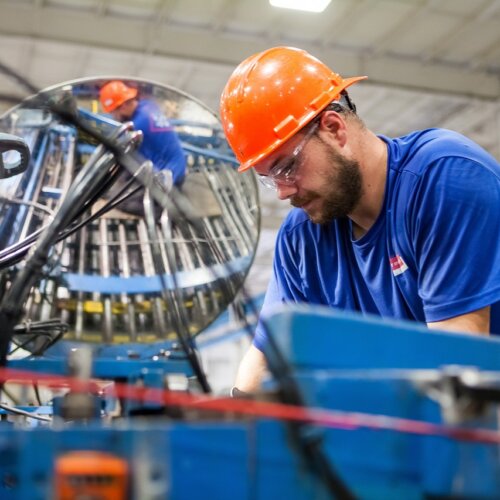 Whether you’re looking for a double belt laminator or something else entirely, Conversion Technologies International always recommends doing your due diligence. Fortunately, we’ve already compiled some important info for you. Check it out!
What are the three types of lamination?
Generally speaking, there are three main types of laminations. Although we can customize lamination projects as needed, that still frequently involves creating a variation of these types.
- Gloss lamination. You’ve probably seen this type of lamination fairly often. It’s high-sheen, reflective, and smooth to the touch. A glossy coating can enhance the vibrancy and color saturation of a product. It also resists moisture well, and tends to be durable. You’ll commonly see a gloss laminate applied to magazine covers, menus, and promotional signage and posters. The drawbacks of a glossy laminate is a tendency to smudge and retain contaminates. In some cases, you can wipe these away. However, this isn’t always possible.
- Matte lamination. This smooth coating doesn’t reflect light, creating a more natural look. Understated compared to gloss lamination, it offers a sophisticated impression. Additionally, a matte appearance cuts down on glare. This makes text easier to read, making it a popular option for book covers, as well as business cards. If legibility is your main priority, a matte laminate may be the best option.
- Soft touch lamination. If you want an “expensive” look, you might like soft touch lamination. It’s very tactile, with a velvety feeling that comes across as more luxurious. As the name implies, this type of lamination has the best “touch” experience, according to many. The overall effect is much like suede. This makes it a great option for higher-end packaging.
What are the different types of lamination machines?
There are so many laminator machines on the market. It can be hard to keep track of them! We’ll start with double belt laminators, but they’re really just the beginning. Some of the most popular types of lamination equipment include:
- The double belt laminator. Typically, we reserve this type of machine for industrial lamination services. It works continuously, with two endless belts that work in synchronicity. They fuse or otherwise meld two pieces of material, relying on a combination of heat and pressure. A heating zone melts the product, activating the adhesive. It then presses the adhesive against the substrate, creating layers. After that, the materials pass through a cooling zone that hardens and stabilizes the layers. This creates your laminated product.
- The pouch laminator. In contrast, you’ll usually find this laminator when working with smaller scale projects. You can even buy them for individual use, often reserved for laminating documents. In that case, you’ll feed the document into a pre-sealed pouch, after which it’s fed through the machine and laminated.
- The cartridge laminator. Another industrial-scale laminator, the cartridge laminator utilizes drop-in cartridges to create a quick, easy process. The cartridge allows you to avoid the large rolls that many other processes rely upon.
- The wide format laminator. We use this laminator for larger products, like big signs and graphics. Most wide format laminators apply cold or thermal roll methods.
- The UV liquid laminator. This machine functions by applying a unique UV liquid to printed materials. It then cures that coating with UV rays. The straightforward nature of this process enables users to use it for high volume projects.
- The automatic laminator. Though not ideal for every project, these machines work with little human interference. While efficient, they have their limits.
How do I choose a good double belt laminator?
Choosing a good laminator is a more complex process than you might initially imagine. It’s not enough to find a well-priced laminator, or even a good seller. Searching “lamination machine near me” and selecting the company with the best reviews isn’t enough.
First consider that there are many different types of laminating machines on the market, and they function quite differently from each other. You don’t want to buy a belt laminator if you’re looking for something that functions on a smaller scale. And the last thing you want is to buy a laminator that functions more like a personal laminator.
On the other hand, you should consider whether you want to buy new or used, and your budget. An industrial belt roller machine can be quite a major investment, and for some business owners, it’s not necessary. In theory, investing in a a permanent product could help you save money. However, many business owners find that this isn’t the case.
This is one reason why, whether they need a double belt laminator or another type of product, many business owners choose to outsource with third party manufacturers.
Frequently Asked Questions
Curious about outsourcing your manufacturing needs? Let’s explore a little further with some frequently asked questions.
What does outsourcing manufacturing involve?
There are two main types of third party manufacturing. They include:
- Toll manufacturing. With toll manufacturing, you supply the raw materials, while the manufacturing handles the processing.
- Contract manufacturing. In this case, the manufacturer covers both the process and the raw materials. You don’t have to cover any step of manufacturing.
How can outsourcing help me save money?
Generally speaking, one of the main benefits of working with a third party is cost efficiency. When working with a third party, you won’t invest in the machines or the facilities. Additionally, you won’t have to train operators or hire new employees. In the long term, this enables you to save quite a bit.
How do I know if a third party manufacturing is reliable?
We recommend vetting any third party manufacturer thoroughly. Part of this involves looking up prior clients and researching their experiences. For example, this story about an automotive client of CTI’s covers a complicated lamination project. Reading up on stories like this can offer you a lot of insight.
And of course, we always recommend an early consultation. Call CTI at 419-924-5566 or contact us here and begin yours!
- << < Previous Post
- 1
- 2
- ...
- 5
- ...
- 326
- 327 Next Post > >>